

Description
Golden Nugget (a.k.a. Gold Nugget)
25 Seeds per pack
Days to Maturity: 55–60 days
Sun Requirements: Full sun
Botanical Name: Solanum lycopersicum
Golden Nugget is a classic heirloom cherry tomato developed by Dr. James R. Baggett at Oregon State University and introduced in 1983. Bred specifically for reliable performance in cooler, maritime climates, this variety quickly proved its worth far beyond the Pacific Northwest and is now grown successfully in gardens across the country. Thanks to its extra-early maturity and dependable yields, Golden Nugget has earned a reputation as one of the most reliable early cherry tomatoes available!
Plants are compact, determinate, and vigorous, typically reaching about twenty-four inches in height with a tidy, uniform growth habit. Despite their manageable size, they are exceptionally productive, setting heavy clusters of fruit early in the season and continuing steadily through summer. The plants tolerate a wide range of conditions, handle heat well, and perform admirably in raised beds, garden plots, and even containers.
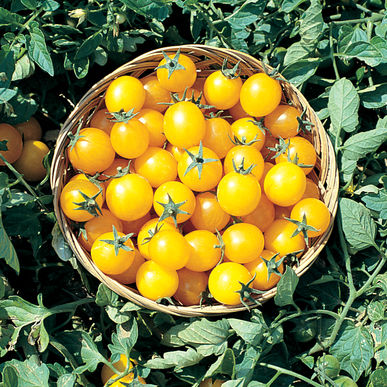
Fruits are small, round to slightly oval cherry tomatoes measuring about three-quarter to one inch in diameter and averaging around one ounce each. They ripen to a rich golden-yellow color and are often among the very first tomatoes to mature in the garden, usually within fifty-five to sixty days from transplant. Many of the earliest fruits are nearly seedless, offering a smooth, pleasant texture, and are known for their resistance to cracking.
Flavor is bright, sweet, and well balanced, with low acidity and a mild, fruity character that makes Golden Nugget especially enjoyable for fresh eating. The thin skins and candy-like sweetness make these tomatoes perfect for snacking straight off the vine, while their attractive color adds appeal to salads, fresh salsas, and mixed tomato dishes.
Golden Nugget combines early maturity, compact growth, heavy production, and excellent flavor into one dependable package. Whether grown for home use or market sales, this golden cherry tomato is a standout choice for gardeners who want fast, reliable harvests and consistently delicious fruit.
Planting Instructions for Golden Nugget Tomato Seeds
When to Start Indoors
Start Golden Nugget Tomato seeds indoors about six to eight weeks before your average last spring frost date. This variety is an early, heat-loving heirloom that cannot tolerate frost, so the goal is to have sturdy tomato transplants ready to go outside once nights are warm and soil has warmed.
Supplies and Setup
Use a sterile, soilless seed-starting mix (not garden soil). Start seeds in any clean container that has drainage holes—cell packs, small pots, recycled cups, egg cartons (fine for the first stage), or a seed tray. Warmth helps germination: seeds sprout fastest around seventy to ninety degrees Fahrenheit, and a heat mat can speed things up. Light is what prevents spindly seedlings—either a strong grow light or the brightest window you have, though grow lights usually produce sturdier plants.
Seeding Depth and Planting
Moisten the seed-starting mix first, then fill containers and firm the mix lightly without packing it tight. Plant two to three seeds per cell or pot so you are not left with blanks if one fails. Cover seeds with about one quarter inch of mix, then water gently so the seeds stay in place. At this stage, the seeds do not need light, but they do need steady warmth and evenly moist mix.
Moisture and Humidity
Cover the tray with a humidity dome or plastic wrap (with a few holes) to hold moisture in. Check daily. The mix should stay moist but not wet—overwatering is one of the main reasons seedlings fail. If you see mold, it is too wet and needs more air circulation.
Germination and Early Seedling Care
Golden Nugget seeds typically germinate in about six to fourteen days, depending on temperature and seed age. As soon as sprouts appear, remove the cover and move them under bright light immediately. After germination, a slightly cooler growing temperature helps make stocky seedlings—around sixty to seventy degrees Fahrenheit is commonly recommended.
Light Requirements
Provide long, strong light every day. Many growers run lights around sixteen to eighteen hours daily. Keep the light close to the plants (just a couple inches above the tops) and raise it as they grow so seedlings do not stretch and get weak.
Air Movement and Disease Prevention
Good airflow helps prevent damping off and encourages stronger stems. A small fan on a gentle setting nearby works well, or lightly brushing the tops occasionally can help toughen them up. Avoid watering the foliage; aim water at the mix.
Thinning
Once Golden Nugget seedlings are up and you can tell which are strongest, thin to one plant per cell or pot. Instead of pulling extras (which can disturb roots), snip the unwanted seedlings at the soil line with scissors.
First Feeding
Once the seedlings have developed their first real “true leaves” (after the initial seed leaves), begin feeding with a water-soluble fertilizer mixed at half strength, about once a week or once every two weeks depending on how the plants look and how rich your mix is.
Potting Up
When plants are roughly two to four inches tall and have at least one good set of true leaves, move them into three to four inch pots. Tomatoes can be planted deeper than most plants—bury the stem up to just below the lowest leaves because the stem will form additional roots. Do not let plants become pot-bound; if roots fill the container and growth stalls, pot up again.
Hardening Off
About seven to ten days before transplanting outdoors, begin hardening off plants. Start with a short time outside in bright shade and sheltered conditions, then gradually increase sun exposure and time outdoors each day. Avoid cold nights and windy conditions early in the process.
When to Transplant Outdoors
Transplant after all danger of frost has passed and conditions are warm enough. A good target is night temperatures consistently above fifty degrees Fahrenheit and soil at least fifty to sixty degrees Fahrenheit. Choose a site that receives full sun.
Outdoor Planting Method and Spacing
Plant deeply, right up to the first set of leaves, to build a strong root system. Tall or spindly seedlings can be planted extra deep, as buried stems will sprout roots and strengthen the plant. Space plants eighteen to twenty four inches apart, with rows three to four feet apart, allowing for the compact, determinate growth habit of this variety.
Before setting each Golden Nugget plant, place one tablespoon of lime, ground oyster shell, or crushed eggshells in the bottom of the planting hole to help prevent blossom end rot and provide calcium for strong cell walls. For added vigor, also place one tablespoon of aged compost and one tablespoon of bone meal in the bottom of the hole, mixing lightly with soil so roots do not sit directly on concentrated material.
Water thoroughly after planting and apply mulch around plants to conserve moisture, moderate soil temperature, and reduce soil splash.
Container Gardening
Golden Nugget does very well in containers. Use a container holding at least three to five gallons of high-quality potting mix. Containers must have good drainage. Place containers in full sun and provide a small cage or stake for support.
Plant Golden Nugget seedlings deeply in containers just as you would in the ground. Containers dry out faster than garden beds, so check moisture frequently and water whenever the top inch of soil begins to dry. During hot weather, daily watering may be necessary. Feed regularly with a balanced or tomato-specific fertilizer to maintain steady growth and fruit production.
Support and Training
This is a determinate tomato that produces a concentrated crop of fruit on compact plants. Cages or stakes are recommended to keep plants upright and fruit off the ground. Heavy pruning is not necessary.
Watering
Keep moisture consistent. Golden Nugget plants generally need about one inch of water per week, more in hot weather. Water deeply at the base of the plant and avoid wetting the leaves. Inconsistent watering can contribute to fruit cracking and blossom end rot.
Fertilizing Outdoors
Plants are moderate feeders. Amend soil with compost before planting, then fertilize again when plants begin setting fruit and continue as needed based on plant vigor. Avoid overdoing nitrogen, which can create lots of leaves and fewer fruits.
Common Problems to Watch For
Blossom end rot is often tied to uneven moisture and calcium uptake, so consistent watering matters. Reduce disease by rotating crops, removing diseased leaves, mulching to prevent soil splash, and keeping plants supported. This variety shows good natural disease tolerance.
Harvesting
Fruits mature in about fifty five to sixty days from transplant. Pick when tomatoes are fully golden yellow and feel firm but slightly soft.
Seed Saving
Golden Nugget is an heirloom, open-pollinated tomato, which means its seeds will grow true-to-type and can be saved for future seasons. Tomato flowers are self-pollinating, making them an excellent choice for gardeners new to seed saving.
Choose fully ripe, healthy fruits from strong, productive plants. For best results, allow the tomatoes to remain on the vine slightly longer than you would for eating so the seeds can fully mature.
To save seeds, cut the tomato in half and squeeze the seeds and pulp into a small jar or container. Loosely cover and allow the mixture to ferment at room temperature for one to three days until a light layer of mold forms and the mixture becomes bubbly. This fermentation process removes the natural gel coating that prevents germination and helps ensure clean, viable seed.
After fermentation, add water, stir, and pour off floating debris and non-viable seeds. Repeat rinsing until only clean seeds remain at the bottom. Drain through a fine mesh strainer and spread seeds in a single layer on a paper plate or screen to dry for five to seven days.
Once completely dry, store Golden Nugget seeds in a labeled jar or seed saving envelope, stored in a sealed container in a cool, dry, dark place. Properly stored seeds most commonly remain viable for three to five years, but can remain viable for up to ten years.
FAQ
Is Golden Nugget a determinate or indeterminate tomato?
Golden Nugget is a determinate cherry tomato. Plants stay compact, usually around twenty-four inches tall, and produce a heavy, concentrated set of fruit on tidy plants.
How long does Golden Nugget take to produce ripe tomatoes?
Golden Nugget typically produces ripe fruit about fifty-five to sixty days from transplant. Because it matures very early, it is often one of the first tomatoes ready to harvest in the garden.
Does Golden Nugget perform well in cool climates?
Yes. Golden Nugget was bred specifically for reliable performance in cooler, maritime climates and has proven itself across a wide range of regions. Its early maturity and strong adaptability make it a dependable choice even in shorter growing seasons.
What size are Golden Nugget tomatoes?
Fruits are small cherry tomatoes measuring about three-quarter to one inch in diameter and averaging around one ounce each. They are round to slightly oval and ripen to a rich golden-yellow color.
What does Golden Nugget taste like?
Golden Nugget has a bright, sweet, and well-balanced flavor with low acidity and a mild, fruity character. The thin skins and candy-like sweetness make them excellent for fresh eating and snacking.
Can Golden Nugget be grown in containers?
Yes! Golden Nugget performs very well in containers. A pot holding at least three to five gallons of high-quality potting mix with good drainage is recommended, along with full sun and light support.
Do Golden Nugget plants need pruning?
Heavy pruning is not necessary. Because this is a determinate variety, simple staking or caging to keep plants upright and fruit off the ground is usually sufficient.
Are Golden Nugget tomatoes resistant to cracking?
Golden Nugget tomatoes are known for good resistance to cracking, especially when plants receive consistent watering and are grown in well-prepared soil.
Can I save seeds from Golden Nugget tomatoes?
Yes! Golden Nugget is an heirloom, open-pollinated tomato, so saved seeds will grow true-to-type. Seeds can be saved from fully ripe, healthy fruits using the standard tomato fermentation method and stored properly for future seasons.











Paul Jiral (verified owner) –
The order arrived promptly (as with all previous orders) and in good condition. With earlier orders the germination rates have been fair to excellent. We are in zone 7B. Therefore, I will be putting this order in seed trays in a few weeks. I chose your company for my first order due to your pro-American marketing. Thank you.
Robert K. (verified owner) –
5 star!
Hazel Hardisty (verified owner) –
Excellent!
Mary Z. (verified owner) –
Deb M. (verified owner) –