
Description
Champion Collards
250 Seeds per pack
Days to Maturity: 70–85 days (baby leaves in about 45–50 days)
Sun Requirements: Full sun; tolerates partial shade. Provide afternoon shade in hot climates to prevent stress and bitterness.
Botanical Name: Brassica oleracea L. Acephala
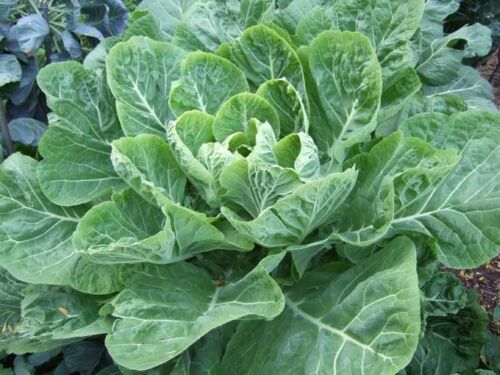
Champion Collards is an open-pollinated, improved Vates-type collard developed by the Virginia Agricultural Experiment Station in 1979. This hardy, widely adapted variety typically grows 24 to 36 inches tall with a similar spread, and can reach up to 40 inches under ideal conditions. Plants produce large, rich blue-green, slightly crumpled leaves with a waxy leaf surface that offers some natural protection from cabbage worms.
Champion is slow to bolt, highly productive, and tolerant of both heat and cold, with plants often surviving winter in milder climates and producing early spring greens. The mild, cabbage-like flavor becomes sweeter after a light frost, and the leaves hold their eating quality longer than Vates, making this variety especially valuable for both home and market gardens.
These versatile greens are excellent for traditional slow-cooked dishes, soups, slaws, wraps, or chips. Champion is a cut-and-come-again crop and a highly nutritious choice, providing generous amounts of vitamins A, C, and K, along with calcium and fiber.
A dependable, cold-hardy collard that delivers steady harvests, excellent flavor, and long-lasting garden performance.
Planting Instructions for Champion Collards Seeds
When to Plant
Champion Collards are a cool-season crop. In southern regions, plant in late summer or early fall for winter harvest. In northern regions, plant in mid to late summer for fall harvest. For spring crops, sow seeds when soil temperatures reach 55–75°F, about 6–8 weeks before the last frost. Seeds may be started indoors to improve germination when outdoor soil temperatures are still cool and unpredictable, giving young plants a stronger start, then transplanted outdoors about 2–3 weeks before the last frost once seedlings are well rooted and growing steadily.
How to Start Indoors
Sow seeds ¼–½ inch deep in clean seed trays using a sterile seed-starting mix. Plant 2-3 seeds per cell and keep soil evenly moist. Germination occurs in 10–21 days. Thin to one strong seedling per cell. Provide bright light and moderate moisture. Harden off seedlings for 7–10 days before transplanting by gradually exposing them to outdoor conditions, starting with a few hours of sheltered sunlight and increasing exposure each day while protecting them from strong wind, heavy rain, and frost.
Transplanting to the Garden
Transplant when seedlings are 4–6 weeks old and well rooted. Space plants 12–24 inches apart in rows 18–36 inches apart. Choose fertile, well-drained soil rich in organic matter with a pH between 6.0 and 7.5. Raised beds are helpful for spring crops to avoid excess moisture.
Direct Sowing Outdoors
Direct sow seeds ¼–½ inch deep in full sun. Plant 3–4 seeds every 12–18 inches and thin to one strong plant per spacing when seedlings reach about 3 inches tall. Keep soil evenly moist until germination, which typically occurs in 5–17 days when soil temperatures are between 50–70°F. Lightly firm the soil after planting, and use row cover if needed to protect young seedlings from insects and drying winds.
Growing Tips
Keep soil consistently moist, providing about 1–1½ inches of water per week. Mulch to conserve moisture and suppress weeds. Feed every 3–4 weeks with compost, compost tea, or a nitrogen-rich fertilizer. Collards grow best in cool weather and become sweeter after light frost.
Pests and Protection
Common pests include aphids, cabbage worms, cabbage loopers, flea beetles, and slugs. Use floating row covers to prevent egg laying. Handpick caterpillars and wash aphids off with water or insecticidal soap. Rotate crops and avoid planting brassicas in the same area for at least 2–3 years to reduce disease.
Harvesting
Begin harvesting baby greens in about 45–50 days when leaves are young and tender, then move to harvesting outer leaves when they reach 6–10 inches long, usually about 70–85 days after planting. Cut leaves at the base with scissors or a knife, leaving the center growth intact so plants continue producing. Harvest as needed for a steady supply, or cut the entire plant just below the crown for a single large harvest. Flavor improves after light frost, and fall plantings may be harvested well into winter with protection.
Storage
Store unwashed leaves wrapped in a damp towel inside a perforated bag in the refrigerator, where they will keep for about 5–7 days. For long-term storage, blanch and freeze, which preserves quality for up to 10–12 months.
Container Growing
Use containers at least 12–16 inches wide and deep (about 5 gallons per plant) with good drainage. Fill with quality potting mix enriched with compost. Plant one collard per container. Place in full sun for 6–8 hours daily, with afternoon shade in hot climates. Keep soil evenly moist and feed every 2–3 weeks with a nitrogen-rich fertilizer. Harvest outer leaves regularly to encourage continued growth.
Overwintering
In mild climates, Champion Collards can overwinter and produce early spring greens. Place plants in a sheltered location protected from strong wind and heavy rain. Keep soil slightly moist but not wet, as soggy soil increases cold damage. During hard freezes, cover plants with breathable fabric, frost cloth, or row cover, removing it once temperatures rise. Container-grown plants should be protected more carefully, since pots freeze faster than garden soil. With proper protection, plants often resume growth as soon as temperatures warm in early spring.
Saving Seeds
Allow healthy plants to overwinter and flower in their second year. When seed pods turn dry and tan, harvest the stalks and allow them to finish drying in a well-ventilated, shaded area. Once fully dry, gently crush the pods by hand to release the seeds, then separate seeds from chaff by blowing lightly or using a fine screen. Only keep fully formed, dark seeds and discard damaged or pale ones. Store cleaned seeds in labeled seed-saving envelopes, then place the envelopes inside an airtight container in a cool, dry, dark location. Properly stored collard seeds remain viable for about 4–5 years. Isolate plants from other Brassica crops to prevent cross-pollination.
FAQ:
How long do Champion Collards take to mature?
Champion Collards reach harvest size in about 70–85 days, though individual leaves can be harvested earlier at about 45-50 days for baby greens.
Can Champion Collards tolerate frost?
Yes. Champion Collards are very cold hardy, and their flavor actually improves after light frost. In mild climates, plants may survive winter and produce early spring greens.
Can I grow Champion Collards in containers?
Yes. Use containers at least 12–16 inches wide and deep with good drainage. One plant per container produces best results.
Do Champion Collards regrow after harvesting?
Yes. Champion Collards are a cut-and-come-again crop. Harvest outer leaves while leaving the center intact for continued production.
Can Champion Collards be eaten raw?
Yes. Young leaves can be eaten fresh in salads or wraps, while mature leaves are excellent for cooking.
What causes Champion Collards to bolt?
Collards may bolt during prolonged hot weather. Champion resists bolting better than most, but afternoon shade in hot climates helps keep plants producing longer.
How should Champion Collards be stored after harvest?
Fresh leaves keep about 5–7 days in the refrigerator when wrapped in a damp towel inside a perforated bag. For long-term storage, blanch and freeze for up to 10–12 months.
Can Champion Collards be overwintered?
Yes. In mild climates, plants often overwinter successfully when protected from hard freezes, and will resume growth in early spring.
Are Champion Collards open-pollinated and good for seed saving?
Yes. Champion Collards are open-pollinated and suitable for seed saving when isolated from other Brassica crops. Properly stored seeds remain viable for about 4–5 years.









Anonymous (verified owner) –
This is my favorite variety and seems to have a sweeter flavor.
Sarah C. (verified owner) –
Nicely packaged and shipping was great!
Gregory Manglitz Sr (verified owner) –
Delicious collards, my wife loves them. Easy to grow.
Sally (verified owner) –