
Have you ever wanted to create a quiet, beautiful corner in your own backyard—a place where you can pray, reflect, and feel closer to God, Mary, the Saints, or the Holy Family? That’s exactly what a Mary Garden (or Holy Family Garden) is. It’s not just about pretty flowers; it’s a centuries-old, grassroots Catholic tradition where we fill a space with plants that bear names or legends connecting them to the Blessed Virgin Mary, her life, or her virtues. We would add on other saints and virtues, as well.
The garden is a perfect pace where Faith and our every day labors can meet…a place where we can extend our Faith and appreciate God’s creation, all at the same time!
Bringing Catholic Faith and devotions into the garden is a truly down-to-earth devotional. It shows us that holiness can bloom right alongside the daisies and the dill. Read on to see how to plant your Mary Garden, plus other Catholic tie-ins that will help grow and enhance your Faith as you grow your own food.
Table of Contents
Starting your Mary Garden

Starting your Mary Garden from seed is the most delightful way to begin. As you hold those tiny seeds, you are holding the promise of life, much like Mary held the promise of our Savior. Watching your garden grow from scratch becomes a beautiful, daily act of faith and patience. It’s where your two hands can work the soil and meet the grace of God through meditation and purposeful plantings.
A Mary Garden is one of the most touching and meaningful ways a Catholic gardener can honor the Blessed Virgin—a quiet, living act of faith that turns soil and seed into prayer. Long before the modern era, faithful Christians across Europe cultivated small gardens filled with plants named for Our Lady and the Holy Family. Every flower, herb, and humble vegetable carried meaning: purity, humility, protection, or nourishment. A Mary Garden wasn’t simply a flower bed—it was a reflection of Heaven’s peace on earth, of the deeper things we believe and hold dear, it was a place of devotion and dedication to God and Our Lady.
Today, planting a Mary Garden or Holy Family Garden with heirloom seeds continues that timeless devotion. These are the same old-time varieties grown and loved by generations past, connecting us to the Faith, work, and devotion of our ancestors and the beauty of God’s creation that never goes out of season. With each seed packet you open, consider pausing to pray a Hail Mary—offering your planting as both labor and prayer, just as the Holy Family’s daily work was united with God’s will.
Discover Why Gardeners Recommend Our Seeds!
Flowers of Our Lady
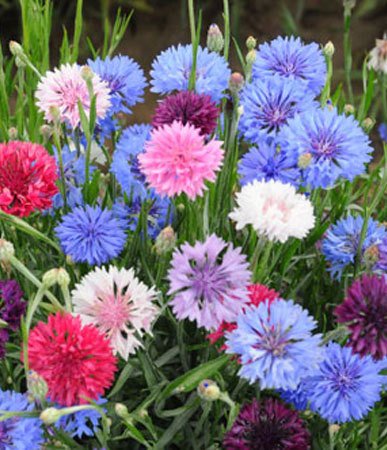
Bachelor’s Buttons (Centaurea cyanus) — Mary’s Crown
With their brilliant blue petals, Bachelor’s Buttons have long symbolized the crown of the Blessed Mother. The deep blue mirrors the color of her traditional robes seen in sacred art. Medieval Christians called this flower Mary’s Crown and planted it to remind them that humility and virtue win heavenly glory.
Black-Eyed Susan (Rudbeckia hirta) — Golden Jerusalem
These radiant gold blooms echo the golden light of the heavenly city and the joy of the Resurrection. Their dark centers suggest the heart of faith amid the brightness of divine truth. Hardy and dependable, they represent steadfast devotion—faith that shines even through life’s trials.
Cosmos (Cosmos bipinnatus) — St. Michael’s Flower
Cosmos, meaning “order” or “beauty” in Greek, reflects the harmony of God’s creation. Traditionally linked with St. Michael, whose feast falls in September when these flowers bloom, Cosmos remind us of Mary’s protection through the angels and of heavenly order springing from divine love.
Lavender (Lavandula officinalis) — Flight into Egypt
Legend holds that during the Holy Family’s flight into Egypt, the Virgin Mary laid the infant Jesus’ clothes upon a lavender bush to dry, and its blossoms took on their sweet fragrance from Him. Lavender remains a symbol of purity, rest, and peace—the scent of home and holiness.
Marigold (Calendula officinalis) — Mary’s Gold
Few flowers have stronger Marian ties than marigolds. The poor once offered these golden blooms in place of coins at Marian shrines—an act of humble devotion. Their bright faces symbolize Mary’s radiant love and her queenship in Heaven.
Moonflower (Calonyction aculeatum) — Lady-of-Night
Blooming only in the evening, moonflowers open their luminous white petals just as the day fades. They recall Mary’s gentle light in the darkness—the star of the sea guiding souls to Christ.
Morning Glory (Ipomoea purpurea) — Our Lady’s Mantle
Each dawn, morning glories unfurl their trumpet-shaped blooms, praising God with the sunrise. Their sprawling vines and sky-colored petals remind us of Mary’s mantle of protection—her open arms extending over all who call upon her intercession.
Nasturtium (Tropaeolum majus) — St. Joseph’s Flower
Though named for St. Joseph, nasturtiums fit beautifully in a Mary or Holy Family Garden. Their bright orange and gold blossoms reflect the warmth and humility of the Holy Family.
Pinks (Dianthus spp.) — Mary’s Pink / Lady Tuft
The name Dianthus means “flower of God,” and these charming old-fashioned blooms have long been connected with Our Lady’s purity and motherly love. Tradition says St. Rosalia appeared in a dress adorned with pinks, bringing healing and grace—a fitting reminder of Mary’s intercession.
Snapdragon (Antirrhinum majus) — Infant Jesus’ Shoes
The flower’s shape resembles the tiny shoes of the Christ Child. Planting them recalls His early years under Mary and Joseph’s care—a tender symbol of family love and innocence.
Sunflower (Helianthus annuus) — Mary’s Gold
Always turning toward the light, the sunflower represents steadfast faith. Just as Mary turned her heart toward her Son, the “Light of the World,” the sunflower reminds us to do the same.

Sweet Alyssum (Lobularia maritima) — Mary’s Little Cross
This low-growing flower bears tiny white clusters shaped like crosses. Sweet alyssum was once said to be blessed by the Virgin herself—a sign of humility and grace in small things.
Sweet Pea (Lathyrus odoratus) — Our Lady’s Flower
The delicate scent of sweet peas was said to perfume the air around Marian shrines. Their blossoms symbolize innocence and joy—perfect for honoring Our Lady in spring.
Sweet William (Dianthus barbatus) — Lady Tuft
This heirloom cousin of pinks offers rich color and fragrance. The sturdy stems and clustered blooms symbolize unity—the Church gathered under the Virgin’s care.
Zinnia (Zinnia elegans, Z. multiflora) — The Virgin / Little Mary
Bright, cheerful, and long-blooming, zinnias symbolize joy and constancy in prayer. Old gardeners called them Little Mary for their faithfulness through summer’s heat.
Herbs of Mary’s Kitchen
Herbs have long been tied to prayer and healing. In a Mary Garden, they remind us of the Blessed Mother’s gentleness, her care for the sick and weary, and the soothing peace she brings to the soul. Their fragrance rises like prayer, filling the garden with quiet grace. Planting herbs in her honor also recalls her hidden years and quiet service to God in the home at Nazareth.
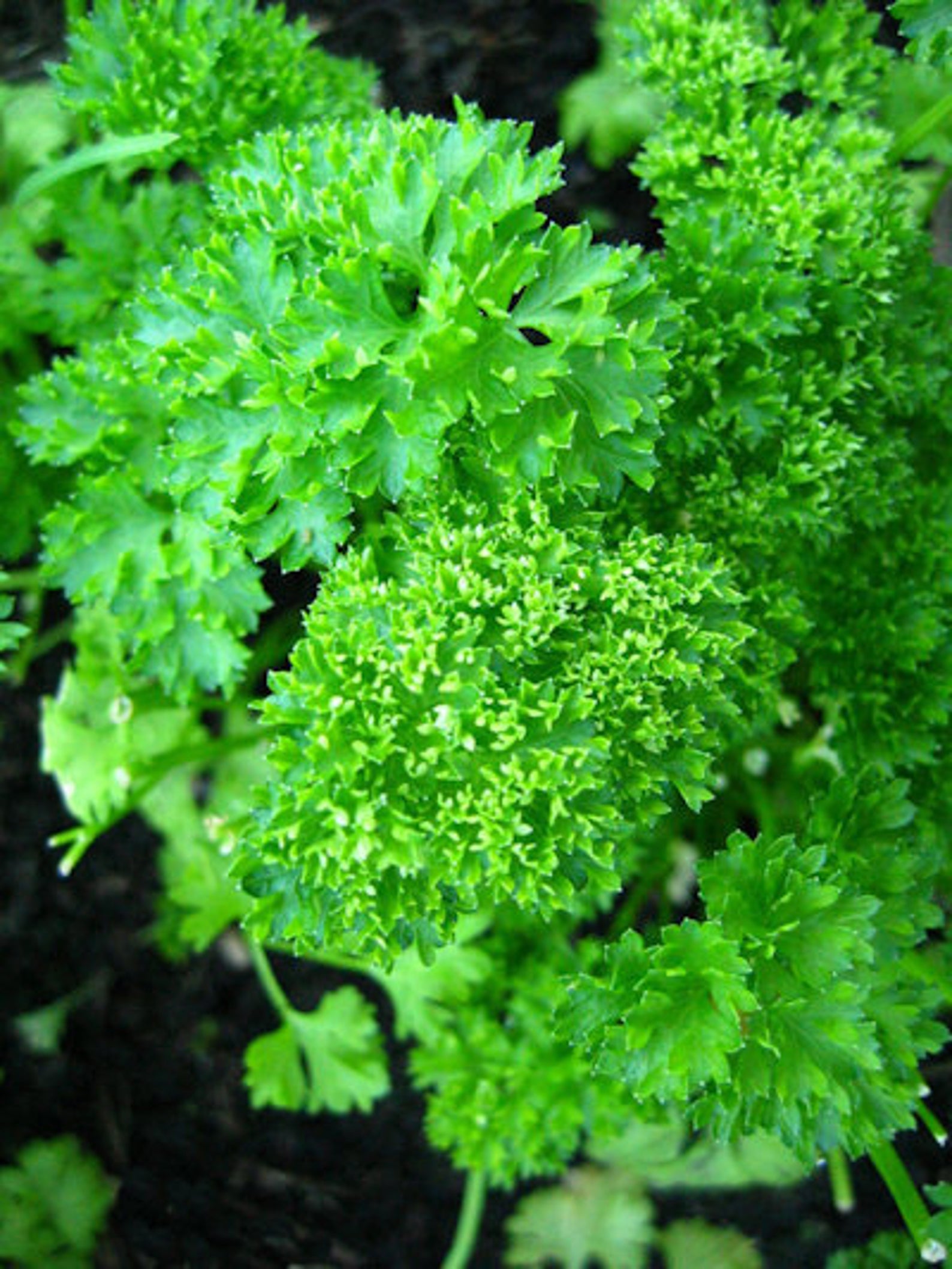
Parsley (Petroselinum crispum) — Our Lady’s Little Vine
Parsley, with its gentle fragrance and curling leaves, was called Our Lady’s Little Vine in medieval herbals. It symbolizes nourishment and faithfulness in daily duty—the quiet virtues of motherhood and care.
Sage (Salvia officinalis) — Mary’s Shawl
Soft, silver-green sage leaves recall the folds of Mary’s mantle. A traditional kitchen herb, it was also valued for healing and wisdom. To plant sage is to invite reflection and remembrance—virtues often pictured in Mary’s heart.
Rosemary (Rosmarinus officinalis) — Mary’s Nosegay
According to ancient legend, when Mary spread her blue cloak over a rosemary bush during the Holy Family’s journey, its white blossoms turned sky blue in her honor. Rosemary stands for remembrance, love, and protection—a faithful herb for Marian devotion.
Thyme (Thymus vulgaris) — The Virgin’s Humility
Low-growing and fragrant, thyme symbolizes humility—the foundation of holiness. Its tiny blossoms and resilient nature remind gardeners that small acts done with love please God.
Chives (Allium schoenoprasum) — Our Lady’s Garleek
This humble herb, called “Our Lady’s Garleek” in early English gardens, brings both beauty and usefulness. Its lavender blooms attract pollinators, while the tender leaves flavor meals—a reminder that holiness often grows in ordinary places.
Dill (Anethum graveolens) — Devil-Away
In old lore, dill was planted to ward off evil influences. Placing it in a Mary Garden symbolizes the Virgin’s role as protectress, keeping harm far from her children.
Coriander (Coriandrum sativum) — St. John’s Head
An ancient herb of the Holy Land, coriander connects to the biblical world Mary knew. Early Christians linked it to St. John the Baptist, Mary’s cousin’s son, tying the herb to faith, courage, and witness.
Basil (Ocimum basilicum) — Holy Communion Plant
Basil, sacred in many Christian traditions, was used to adorn church altars and feast-day processions. Legend says it grew around the True Cross. Its sweet aroma represents devotion and joy—fitting for the Queen of Heaven’s garden.
Marjoram (Origanum vulgare) — Mary’s Bedstraw
Gentle and fragrant, marjoram was believed to have been used as a bedding herb for the Christ Child. Its soft leaves and delicate scent evoke the peace of Bethlehem and the tenderness of the Holy Mother’s care.
Cumin (Cuminum cyminum) — Cross-Cummin
This ancient spice was carried along trade routes of the Holy Land. The name “Cross-Cummin” links it to the Passion and Mary’s suffering at the foot of the Cross. A small but meaningful addition to a devotional herb bed.
Fennel (Foeniculum vulgare) — Our Lady’s Fennel
Tall and feathery, fennel’s upright growth and sweet anise scent have long been associated with watchfulness and grace. Medieval herbals record it as an herb of protection—just as Mary guards those who trust in her.
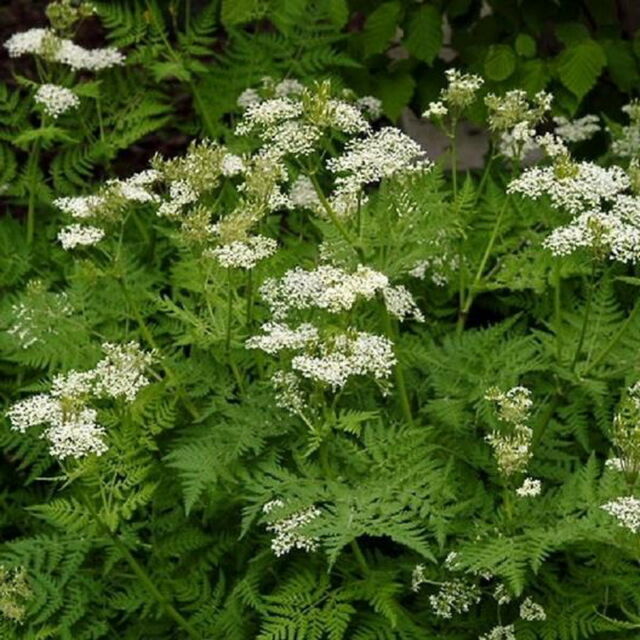
Anise (Pimpinella anisum) — Our Lady’s Sprig
Anise was known as “Lady’s Tobacco” or “Our Lady’s Sprig.” Its delicate umbels of white flowers and aromatic seeds recall purity, faith, and the sweetness of holy living.
Spearmint (Mentha spicata) — Mary’s Mint
Fresh and renewing, mint brings vigor to the garden and symbolizes the refreshment of the soul under Mary’s care. In folk devotion, mint was also thought to grow wherever the Virgin’s feet had touched the ground.
Chicory (Cichorium intybus) — Heavenly Way
The sky-blue blossoms of wild chicory open each morning to the sun and close by evening—a living parable of prayer and faith. The old name Heavenly Way reminds us that Mary always leads us toward her Son.
Catnip (Nepeta cataria) — Mary’s Nettle
This gentle, calming herb was once called Mary’s Nettle for its soft leaves and healing nature. It soothes and steadies—a small reminder of the comfort Mary brings to weary hearts.
Chamomile (Matricaria chamomilla) — Lady’s Flower
Known as the “Mother’s Herb,” chamomile has been used for centuries to bring rest and relief. Its old name, Lady’s Flower, honors Mary’s motherly tenderness. The golden centers surrounded by white petals recall both purity and heavenly joy.
Heirloom Vegetables for the Holy Family Garden

To grow food with love and gratitude is to imitate the quiet labor of the Holy Family. When we till the soil, plant seeds, and feed our families from what God provides, we share in the same humble, joyful work that sustained Jesus, Mary, and Joseph. A Holy Family Garden celebrates that vocation—turning daily toil into prayer and family life into worship.
Fava Bean (Vicia faba) — St. Joseph’s Bean
In Sicilian tradition, prayers to St. Joseph during famine were answered with rain and the first crop to return: fava beans. They’re still blessed and eaten on March 19. Planting favas thanks God for providence and honors the protector of the Holy Family.
Pole Bean (Phaseolus vulgaris) — Jacob’s Ladder
The climbing vines of heirloom pole beans recall Jacob’s Ladder, reaching from Earth to Heaven. In a Mary or Holy Family Garden, they symbolize prayers rising through daily labor.
Beans (bush and lima) — Our Lady’s Beans
Old Christian lore calls them Our Lady’s Beans, said to have fed the Holy Family on their travels. Reliable and abundant, they witness to God’s steady care.
Peas — Mary’s Modesty
Their pure white blooms symbolize purity and the virtues of modesty and humility, virtues of Mary and the life of Nazareth. The climbing vines mirror the soul’s reach toward Heaven.
Cabbage (Brassica oleracea) — Head of the Redeemer
The dense, protective head of cabbage represents Christ’s strength and the Church’s steadfastness. It’s also tied to St. Brigid’s Plant—a sign of charity and humble sustenance.
Onion (Allium cepa) — Mary’s Tears / Protection from Evil
Onions have long symbolized both sorrow and protection. Their layers recall Mary’s tears, while ancient Christian households planted them for health and safety—signs of God’s guardianship over the home.
Garlic (Allium sativum) — St. Peter’s Plant
A sign of courage and steadfastness, garlic’s enduring bulbs remind us to be strong in faith and firm in defense of truth, as St. Peter was.
Lettuce (Lactuca sativa) — Saint Fiacre’s Lettuce
Linked to St. Fiacre, patron of gardeners, lettuce represents humility, simplicity, and the quiet joys of ordinary life—a perfect reflection of the Holy Family’s home at Nazareth.
Turnip (Brassica rapa) — Christ’s Root
Simple, hearty, and humble, turnips stand for steadfast faith and gratitude in small blessings.
Pumpkin & Heirloom Winter Squash (Cucurbita spp.) — Sign of the Resurrection / Our Lady’s Gourd
Gourds and pumpkins symbolize the Resurrection—the hard shell holding seeds of new life—and the abundance of God’s provision.
Cucumber (Cucumis sativus) — Pilgrim’s Fare
Among the foods remembered from the Israelites’ desert journey, cucumbers remind us of pilgrimage and gratitude for daily bread.
Mustard Greens (Brassica juncea, B. rapa) — The Mustard Seed of Faith
Christ’s parable makes mustard the emblem of small beginnings that grow into great shelter. Mustard greens bring that teaching to life.
Leek (Allium ampeloprasum var. porrum) — St. David’s Leek
Symbol of courage and constancy in Welsh devotion to St. David.
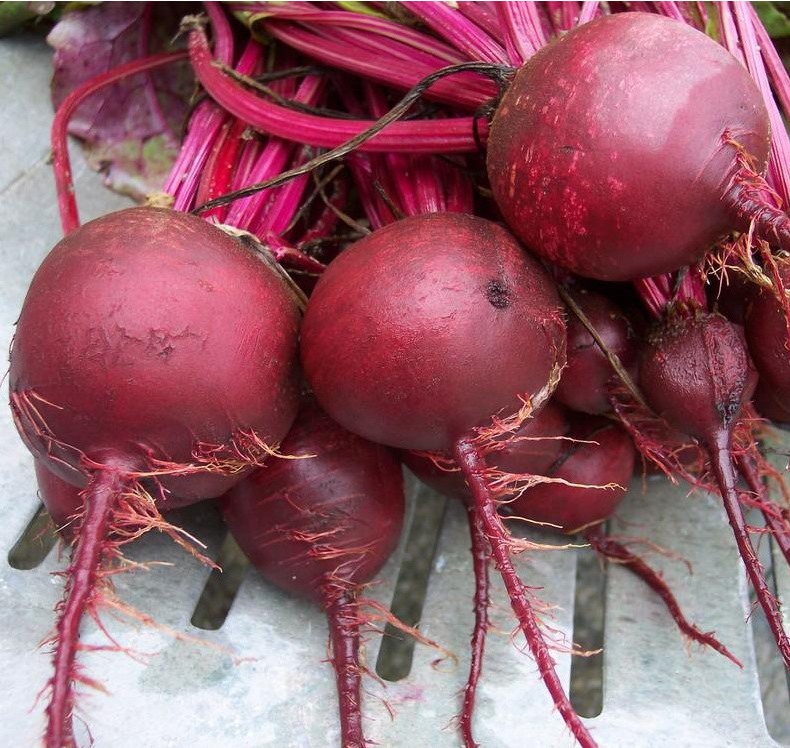
Beet (Beta vulgaris) — Lenten Simplicity
A fasting food across Christian Europe, beets represent temperance and humility—virtues of faithful labor.
Carrot (Daucus carota) — St. Fiacre’s Garden
Under St. Fiacre’s patronage, root crops like carrots signify hidden virtue—holiness growing unseen until its appointed time.
Strawberry (Fragaria × ananassa) — Fruit of the Righteous
Called the Fruit of the Righteous in Christian lore, strawberries’ low growth and white flowers symbolize humility and purity—perfect along the front edge of a Marian bed.
Melons (Cantaloupe and others) — Summer Hospitality
Sweet and refreshing, melons symbolize joy in sharing God’s bounty and the warmth of Christian welcome.
Carob (Ceratonia siliqua) — St. John’s Bread
Known as the food of St. John the Baptist in the wilderness, carob connects the home garden to the Gospel story and God’s providence.
Plants of Virtue: Growing the Fruits and Gifts of the Holy Ghost
Just as the Holy Ghost fills our hearts with grace, our gardens can reflect His work through beauty, nourishment, and peace. Many heirloom plants carry meanings tied to the Fruits and Gifts of the Holy Ghost—love, joy, peace, patience, kindness, goodness, faithfulness, gentleness, and self-control. Planting them can turn an ordinary garden into a daily lesson in virtue and a living act of prayer.
Sunflower (Helianthus annuus) — Faith and Constancy
The sunflower turns its face toward the light, just as the soul turns toward Christ. Its tall, sturdy stalk symbolizes steadfast faith, joy, and the constancy of a heart fixed on God.
Pea (Pisum sativum) — Peace and Purity
The tender, climbing vine of the pea represents peace and the pure simplicity of faith. Its delicate white blossoms recall innocence and the quiet harmony that comes from living close to God.
Zinnia (Zinnia elegans) — Perseverance and Joy
Blooming through the heat of summer, zinnias stand for endurance, cheerfulness, and the joy that perseveres through trials—a reflection of the enduring gladness the Holy Ghost gives to patient souls.
Basil (Ocimum basilicum) — Faith and Devotion
Sacred since early Christian times, basil was said to have grown at the foot of the True Cross. Its fragrance symbolizes devotion, reverence, and steadfast belief in the midst of hardship.
Thyme (Thymus vulgaris) — Humility and Courage
Tiny, low-growing thyme represents humility—the foundation of all virtue—yet its strength and fragrance remind us that even small acts of faith carry great courage before God.
Sweet Alyssum (Lobularia maritima) — Gentleness and Charity
With its clusters of tiny white flowers, sweet alyssum symbolizes gentle love and kindness. Its fragrance fills the air softly, like quiet acts of charity done without fanfare.
Chamomile (Matricaria chamomilla) — Patience and Peace
Chamomile bends without breaking and blooms low to the earth. Known since ancient times for its calming nature, it represents peace, patience, and the serenity of a soul resting in God’s care.
Marigold (Calendula officinalis) — Joy and Sacrifice
Called Mary’s Gold, marigolds reflect the golden joy of the soul that offers its life in cheerful service. Their brilliant color mirrors the warmth of divine love shining through perseverance.
Bean (Phaseolus vulgaris) — Hope and Providence
Beans, once called Our Lady’s Beans, represent trust in God’s provision. Their steady growth and abundant yield remind us of hope’s reward when faith takes root.
Carrot (Daucus carota) — Goodness Hidden in Humility
Growing quietly beneath the soil, carrots symbolize the goodness that isn’t always seen by the world but is known to God. Their sweetness speaks of virtue ripened in patience and humility.
Lettuce (Lactuca sativa) — Peace and Simplicity
Gentle and refreshing, lettuce embodies simplicity and contentment—the peace that comes from a humble life lived in God’s presence.
Rosemary (Rosmarinus officinalis) — Remembrance and Fidelity
Long associated with memory and loyalty, rosemary calls us to remember God’s blessings and remain faithful through every season.
Dill (Anethum graveolens) — Strength and Protection
Once planted to ward off harm, dill represents the strength and perseverance that flow from faith in God’s care. Its feathery leaves and golden umbels stand for steadfastness through adversity.
Parsley (Petroselinum crispum) — Renewal and Hope
Used in Passover as a symbol of rebirth, parsley reminds us of renewal through grace—the fresh hope the Holy Ghost brings to every heart turned toward God.
Hyssop (Origanum syriacum or Hyssopus officinalis) — Purity and Cleansing
“Purge me with hyssop, and I shall be clean.” (Psalm 51:7) Hyssop stands for spiritual cleansing and repentance—a fitting symbol of the Holy Ghost’s sanctifying power.
Cucumber (Cucumis sativus) — Self-Control and Refreshment
Cool and renewing, cucumbers remind us of temperance and moderation—virtues that refresh the soul and keep the body disciplined in harmony with the spirit.
Pumpkin (Cucurbita pepo) — Generosity and Gratitude
A symbol of harvest abundance, the pumpkin represents charity and thanksgiving—virtues that grow from hearts full of gratitude for God’s providence.
Beet (Beta vulgaris) — Compassion and Sacrifice
With their deep red roots, beets symbolize compassion and the sacrificial love that runs to the heart of Christian virtue—love that nourishes others quietly and completely.
Planting Virtue in Your Garden
Plant with virtue in mind we open our heart and mind to dwell on the things of God as we till the soil. We love the idea of letting our gardens mirror the soul’s growth under grace. Choose one plant for each Fruit or Gift of the Holy Ghost, or dedicate a small section of your garden to the virtues you wish to cultivate—patience, gentleness, humlility, or charity, for example.
As you work the soil, pray:
“Come, Holy Ghost, fill the hearts of Thy faithful, and kindle in them the fire of Thy love.”
With every seed planted and every weed pulled, the garden becomes not just a place of growth, but a place of grace—a quiet corner where virtue blooms and the Holy Ghost makes all things new.
Designing Your Holy Family or Mary Garden

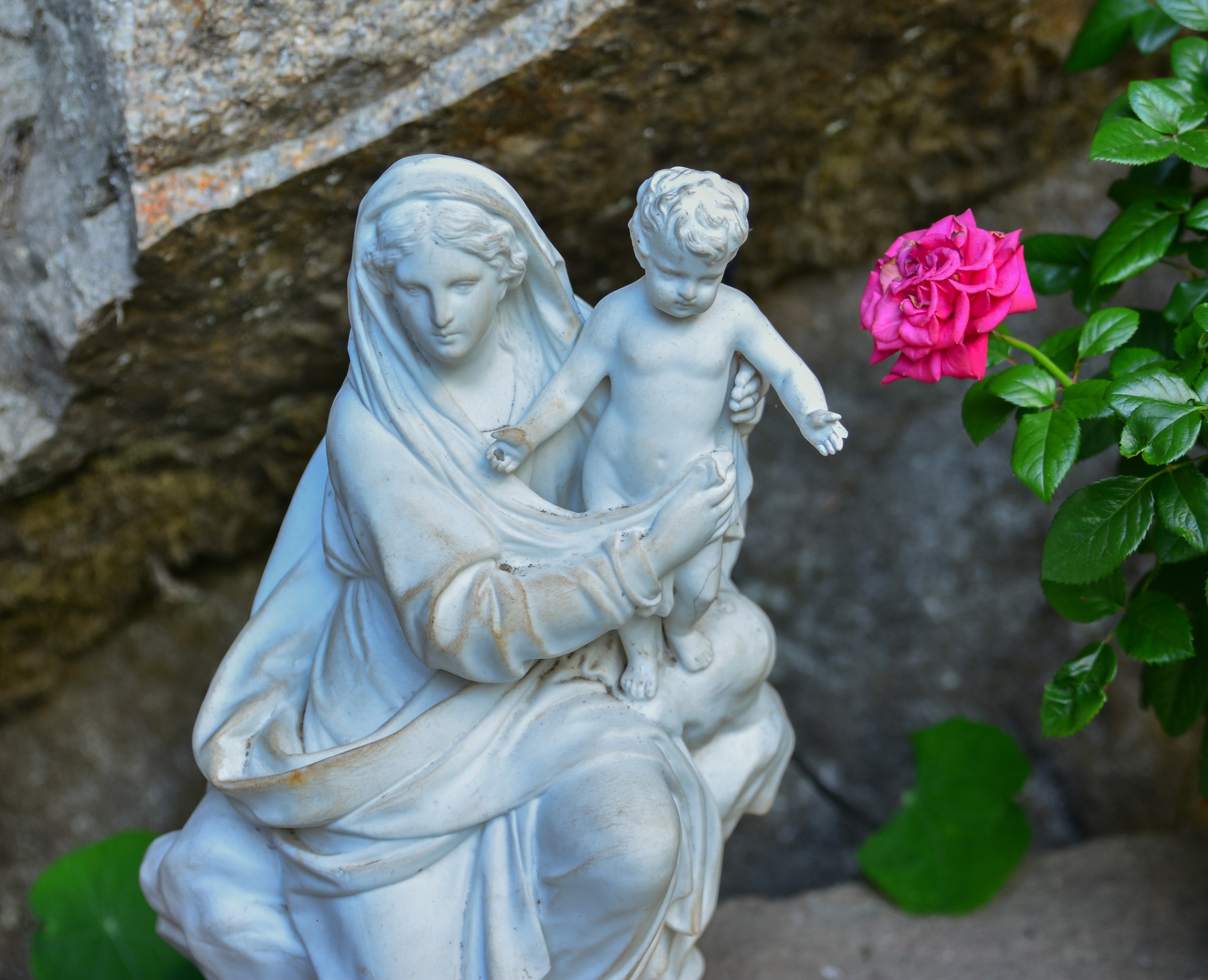
Whether you dedicate your planting space to Mary alone or to the entire Holy Family, the layout can reflect prayer and purpose. Traditionally, a Mary Garden centers around a statue of the Blessed Mother—perhaps holding the Child Jesus or extending her hands towards us, her children. A Holy Family Garden may include figures of St. Joseph and the Christ Child, representing labor, home, and divine love. A thoughtfully placed bench, a shrine placed here or there, Stations of the Cross around the border, all ideas to truly make this space in the yard a place for devotion, prayer, and connection to the Faith!
Surround the centerpiece with soft blue, white, and gold flowers—the colors of purity, faith, and joy. Plant low herbs such as rosemary, thyme, and chamomile near the base to create a fragrant carpet at her feet. In outer rings, grow mid-height flowers like marigolds, zinnias, and cosmos. Tall sunflowers or fennel can form a natural boundary, standing like faithful guardians.
To mirror the life of Nazareth, include a small kitchen garden section with heirloom vegetables and herbs. Encourage your family to pray together while planting, and consider saying a Hail Mary with packet you open or short aspiration with each seed you sow. It turns gardening into a living rosary—each bed a mystery of love, each bloom a prayer of gratitude.
The Grace of Sowing: A Seed Prayer

This Mary Garden—or Holy Family Garden—is more than a list of beautiful plants; it is like a living rosary in your own backyard.
When you sow your seeds, make it a moment of prayer.
By doing this, you dedicate the entire process to the Blessed Mother. You offer the labor of your hands, the waiting of your heart, and the beauty of the plants to come. As the seeds germinate and the plants grow, your devotional space will bloom—watered by grace and grown with love. It is a way to bring your faith out of the missal and into the soil.
May your garden bring you peace, beauty, and a closer walk with Christ through the intercession of Our Lady. Happy planting!
What are your thoughts about a Holy Family or Mary Garden? Drop a comment below!
FAQ:
What is a Mary Garden or Holy Family Garden?
A Mary Garden or Holy Family Garden is a devotional planting space filled with flowers, herbs, and vegetables that carry traditional Christian/Catholic symbolism. Each plant reflects a virtue, a story, or a legend connected to Mary, Jesus, or St. Joseph.
Why would someone plant a Mary Garden or Holy Family Garden?
Because it turns ordinary gardening into a quiet act of prayer. These gardens help you grow closer to God while honoring the Blessed Mother and the Holy Family through symbolic plants and peaceful surroundings.
What plants are traditional in a Mary Garden?
Marigolds (“Mary’s Gold”), lavender (“Flight into Egypt”), bachelor’s buttons (“Mary’s Crown”), morning glories (“Our Lady’s Mantle”), and sweet alyssum (“Mary’s Little Cross”) are among the most common flowers used in a Mary Garden.
What plants belong in a Holy Family Garden?
A Holy Family Garden often includes symbolic vegetables and herbs such as fava beans (“St. Joseph’s Bean”), peas (“Mary’s Modesty”), beans (“Our Lady’s Beans”), rosemary (“Mary’s Nosegay”), and lettuce (“Saint Fiacre’s Lettuce”), plus many more!
How do I start a Mary Garden or Holy Family Garden from seed?
Choose heirloom seeds tied to Christian symbolism, prepare your soil, and offer the planting as a prayer. Many gardeners say a Hail Mary or a short intention as they plant each type of seed.
Do I need a statue in a Mary Garden or Holy Family Garden?
You don’t have to, but many gardeners place a statue of the Blessed Mother or the Holy Family at the center. A cross, shrine, or simple prayer bench also works beautifully.
What colors are most traditional in a Mary Garden?
Blue, white, and gold are the classic Marian colors. They symbolize purity, faith, and heavenly joy, giving the Mary Garden its recognizable devotional look.
Can I create a Mary Garden or Holy Family Garden in a small space?
Yes — even a porch pot, balcony planter, or small raised bed can become a meaningful devotional garden. Choose symbolic plants and arrange them around a small holy image or cross.
How should I design the layout of a Mary Garden or Holy Family Garden?
Keep the devotional focal point in the center, surround it with low herbs, then medium-height flowers, and finish with taller plants like sunflowers or fennel around the edge. This creates a peaceful, prayerful structure.
Is there a prayer to use when planting a Mary Garden or Holy Family Garden?
Many gardeners pray a simple seed prayer or offer a Hail Mary as they work. The idea is to dedicate the entire Mary Garden or Holy Family Garden to God through the intercession of Our Lady and the quiet example of the Holy Family.











Thank you for your wonderful suggestions of planning a Marian Garden.
Don’t forget to mention the Forget Me Not flowers to remind us to pray for the Holy Souls in Purgatory.
+
J.M.J.
Dear Mary Rose,
You’re welcome. Yes! That’s a wonderful suggestion to add to the article. Love it!
Thank you, and God bless,
John, Sarah, and Family
Hello,
I love reading about Our Lady’s garden. Is this available in book format?
God Bless You~
JMJ+
+
J.M.J.
Dear Theresa,
Thank you for your comment. We’re glad you like our article. :_0 We do not have this in booklet form. You could, however copy the article and paste into something like Microsoft Word, and email, etc. and then print it off. We hope this helps!
God bless and keep you,
john, Sarah, and Family
Thank you for this beautiful and inspiring article. My problem is finding plants that thrive in part shade/part sun. Do you have any recommendations?
+
J.M.J.
Dear Maryann,
Thank you! Glad you like the article. Yes, we can offer some helpful suggestions. Here is a good list of what grows well in your area you can try planting in part shade:
Vegetable and Herb Varieties That Thrive in Part Shade
Here are vegetable, fruit, flower, and herb varieties that do well in partial shade in Zone 8a, meaning they can handle about 3–6 hours of direct sun or dappled light each day. Shade slows growth slightly, but these crops still perform reliably.
Leafy Greens
Lettuce (all loose-leaf and romaine types) – excellent shade crop; slower to bolt in partial sun.
Spinach – grows best in cool, filtered light; ideal under taller crops.
Swiss Chard – one of the most tolerant greens; produces continuously even in dappled shade.
Kale (such as Lacinato, Dwarf Blue Curled, Red Russian) – thrives with morning sun and afternoon shade.
Collards – tolerate heat better when shaded.
Mustard Greens – partial shade keeps leaves mild and tender.
Root Crops
Beets – need a few hours of sun for roots to size up, but handle partial shade well.
Carrots – slower to mature but sweeter in light shade.
Radishes – quick crop that still performs with filtered light.
Turnips – leafy tops grow well in shade; roots may be smaller but still usable.
Herbs
Parsley – actually prefers part shade in warm climates.
Cilantro – bolts slower in partial shade.
Chives – tolerate lower light and keep producing.
Mint – thrives in moist, shady spots (best grown in containers to contain spread).
Lemon Balm and Oregano – both will grow fine with morning sun and afternoon shade.
Other Vegetables
Peas – handle partial shade during spring or fall, though yield decreases slightly.
Broccoli and Cauliflower – tolerate light shade, which helps prevent premature bolting in warm spells.
Cabbage – can produce full heads with less than full sun if temperatures stay moderate.
Flowers
Calendula – grows and blooms well in part shade; flowers may last longer in cooler, filtered light.
Nasturtium – thrives in partial shade, producing more leaves than blooms but both are edible and attractive.
Sweet Alyssum – handles light shade gracefully; its fragrance and compact growth make it a fine border plant.
Violas and Pansies – perfect for cool, partially shaded spots; they bloom longer when shielded from afternoon sun.
Forget-Me-Nots – love moist, shaded areas and reseed easily each year.
Foxglove (Digitalis purpurea) – flourishes in dappled light and offers tall, stately spikes of color for borders.
Impatiens and Begonias – reliable bloomers in deeper shade if you carry bedding flower selections.
Fruits
Strawberries – tolerate partial shade well; they produce fewer but often larger, juicier berries when shielded from heat.
Raspberries – do best with morning sun and afternoon shade; filtered light helps reduce heat stress.
Blackberries – adaptable to part sun, especially thornless varieties.
Currants and Gooseberries – among the best fruiting shrubs for shady gardens, thriving where most fruits would fail.
Blueberries – prefer full sun for heavy yields but will still bear in part shade if soil is acidic and well-drained.
We hope this helps!@
Thank you for your continued patronage. 🙂
God bless!
John, Sarah, and Family
Thank you for such beautiful thoughts and planting a themed garden for Mary and the Holy Family.
I think I will use my rather new spiral herb garden for this purpose.
+
J.M.J.
Dear Carol,
Thank you for your feedback. Glad you liked our article. 🙂 Your spiral herb garden sounds great for this!
May God bless and keep you,
John, Sarah, and Family